
· Maya Colton
How to clean toe spacers, and how to tell when one is done
Toe spacers live in the warmest, dampest corner of the whole body: between the toes, often under a sock, sometimes inside a shoe for hours. That is exactly where they need to be to do their job, and it is also why care is not an optional extra with this product. The good news is that the routine takes about a minute. The three questions that land in our inbox are always the same ones, so here they are answered in order: what to wash them with, how often, and how to tell when a piece has reached the end of its life.
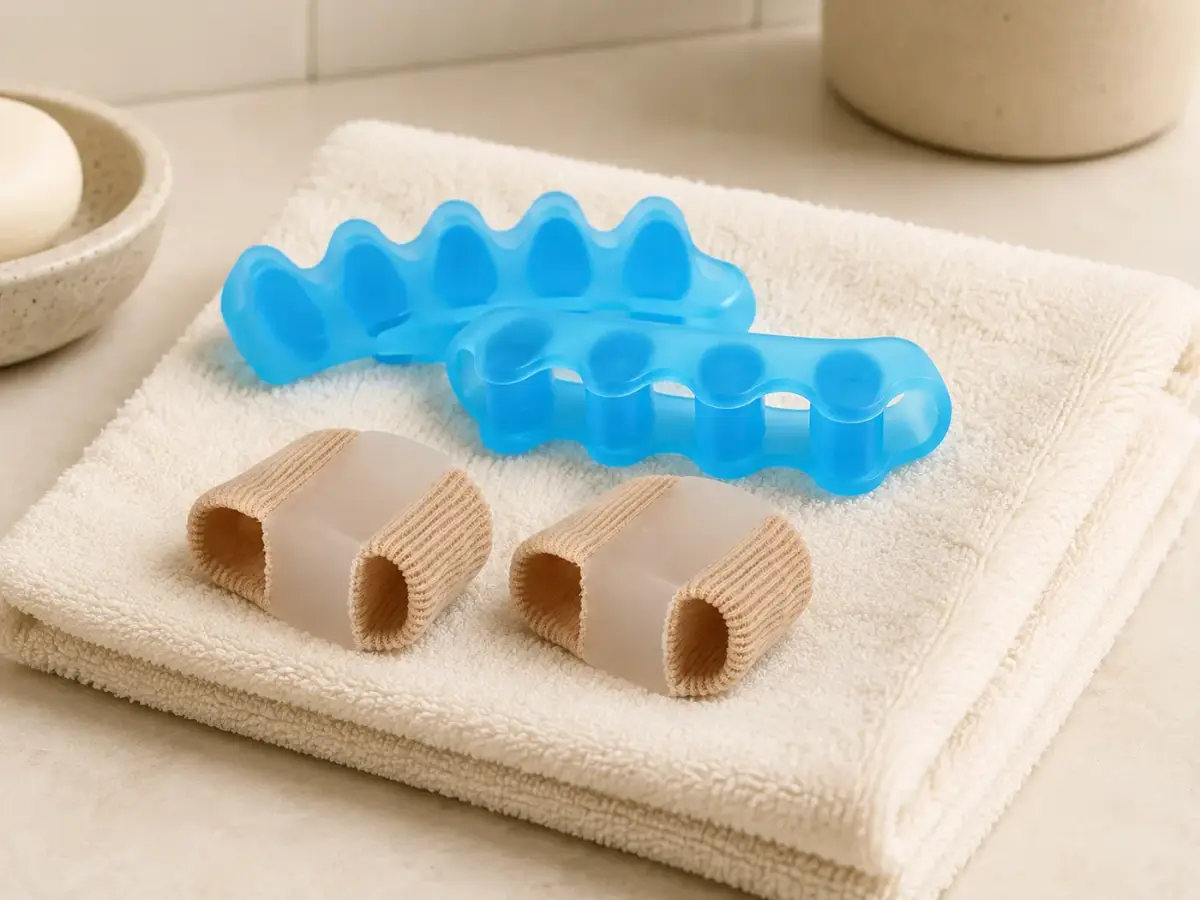
The one-minute wash, step by step
There is no protocol to memorise and no special product to buy. Warm water and mild soap is the entire method for everything we sell, and the only real difference between the two formats is how much attention the material needs.
| Step | Gel five-toe pair | Fabric separator tube |
|---|---|---|
| Wet | Warm water, never hot | Warm water, never hot |
| Wash | A drop of mild soap, rub between your fingers | Mild soap, squeeze repeatedly so it works through the sleeve |
| Rinse | Rinses clean in seconds | Squeeze under clean water until no suds come out |
| Dry | Press in a towel, air dry | Press in a towel, air dry overnight |
The step people skip is the last one, and it is the one that matters most. Air drying means air: a towel on the side of the sink, a dish on a shelf, a spot with some movement around it. It does not mean a radiator, a hairdryer, a sunny windowsill in July, or the dashboard of a parked car. Soft gel and heat have a bad relationship, and every shortcut that involves warming a spacer to dry it faster costs you more life than the ten minutes it saves.
Two materials, two pairs of hands
Our two products are built differently, and that difference decides how you handle them at the sink.
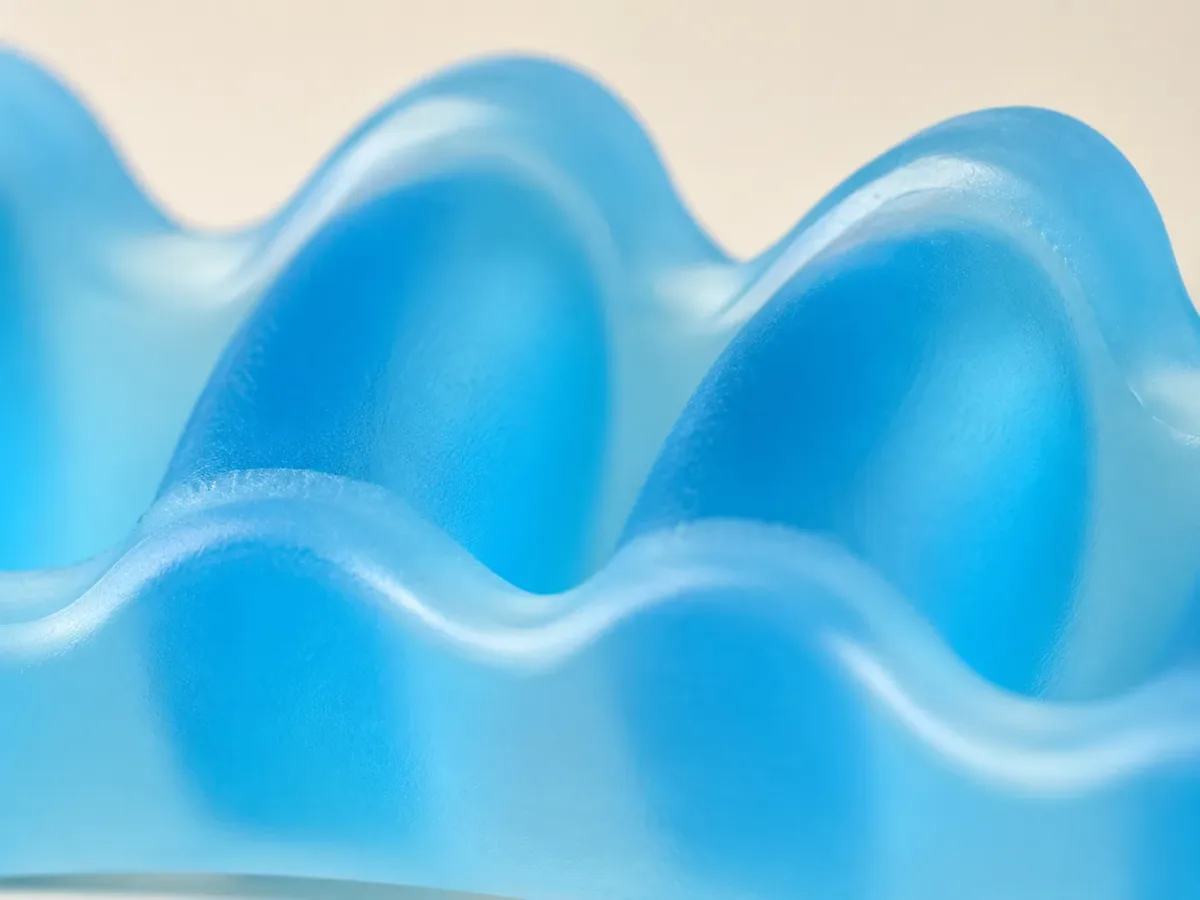
The gel five-toe pair is a single moulded piece of soft SEBS gel per foot. The surface is smooth and closed, so there is nothing for water or soap to soak into and nothing to work out of a weave. A few seconds under the tap with soapy fingers genuinely does it, and after a press in a towel the pair is close to dry already. This is the easy one.
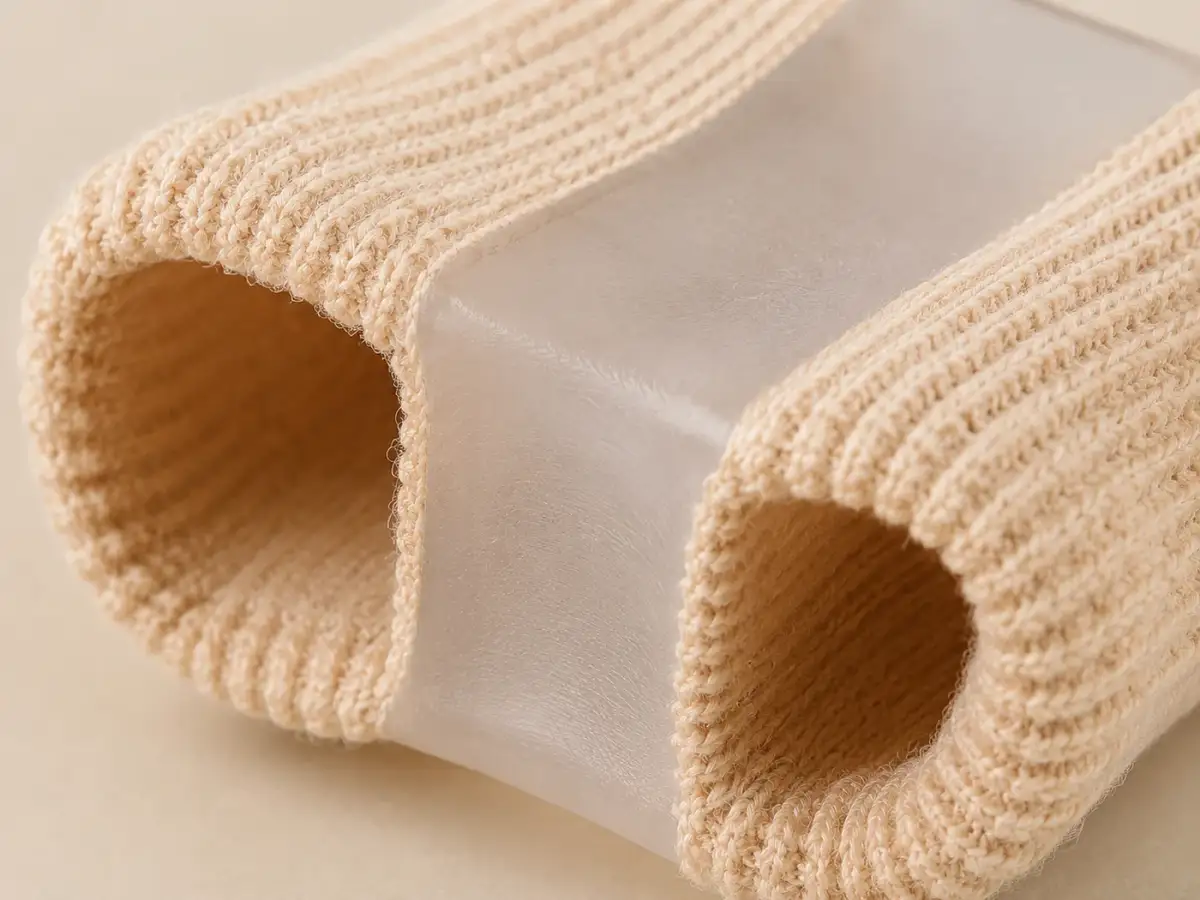
The separator tubes are a gel core inside a ribbed knitted sleeve, and that sleeve is the reason they stay put under a sock all day instead of sliding around. It is also the part that holds moisture, so a tube needs a squeeze rather than a rinse. Work the soap through the knit with your fingers, then squeeze under clean running water until the water runs clear, because soap left in a fabric that sits against thin skin between the toes is the usual cause of a tube that starts to feel scratchy. Press it in a towel and give it the night.
How often to wash, by the kind of session you just did
Not every session earns a wash. The variable that decides is moisture, not time. A calm evening on clean bare feet leaves a spacer close to how it started; a warm afternoon inside a shoe does not.
Wash the same day whenever you have been sweating: a yoga session, a mobility class, the post-run window while your feet are still warm, or any hot day. Wash the same day, too, whenever tubes have spent a working day under a sock inside a shoe, which is the highest-moisture way anyone uses them and the setup described in my guide to barefoot shoes and toe spacers. For a quiet fifteen minutes on the sofa with clean feet, every few sessions is plenty, as long as every few sessions actually happens.
What quietly shortens a spacer's life
Almost nothing that shortens the life of a soft gel product happens while you are wearing it. It happens in the twenty minutes afterwards, and it is nearly always one of four things.
Heat. Radiators, hairdryers, hot windowsills, a car in summer. Soft gel stays soft because of what it is, and repeated heating is the fastest way to change that. Harsh cleaners. Solvents, bleach, alcohol gels and scouring products all attack the material without cleaning it any better than plain soap did. Damp storage. A tube pushed into a gym bag pocket or sealed into a pouch while still wet has nowhere to dry, and that, rather than the sweat itself, is what makes a piece go stale. Rough handling. Pull a tube on and off by its whole body rather than stretching one edge, and put the gel pair on toe by toe rather than forcing the whole piece into place at once. The knitted sleeve exists to spread stretch across the tube instead of concentrating it in one spot, and handling it gently lets it do that.
None of that is demanding. It is really one sentence: soap, no heat, dry before it goes away.
The three signals that a piece is done
We do not print a replace-by date on anything, because a spacer worn every single day inside a shoe and one used twice a week on a mat are not living the same life, and a date would be guesswork dressed up as guidance. Judge the piece in your hand instead. When we test a product, four criteria decide whether it stays in the range, and the fourth is washability and durability: we hand wash every piece repeatedly through the test period and reject anything that tears, clouds, or loses its shape. Those same three failures are exactly what to watch for at home.
failure signals we test for after repeated hand washing: tearing, clouding, and loss of shape
— ToeRoom testing protocol, how we test, 2026
rating buyers give the fabric-covered separator tubes across 660 verified purchases
— ToeRoom verified buyer reviews, 2026
cost per tube in the 6-pack, against about $6.66 per tube in the 3-pack
— ToeRoom pricing, 2026
A tear. Bare gel rings fail at their thinnest point, which is precisely the problem the knitted sleeve was designed around: it distributes the stretch across the whole tube rather than letting one edge take it. Any split, however small, means that piece is finished, because a tear only ever grows. Clouding. Soft gel that has gone milky or chalky where it used to be clear has changed, usually after heat or a harsh cleaner. A lost shape. A gel pair that no longer springs back between the toes, or a ring that has stretched wide enough to slide off, has stopped doing the one mechanical job it exists to do.
Rotation: the reason a spare changes everything
Here is the practical problem nobody warns you about. A tube drying on the towel is a tube you cannot wear, and the evening you find only a damp one is the evening the habit quietly breaks. Everybody who wears these daily solves it the same way: keep more than one in play, one on the toe and one on the towel, and the drying time stops being your problem.
That is the whole argument for the six-pack over the three-pack. At $24.95 for six, each tube works out at about $4.17 against roughly $6.66 in the $19.95 three-pack, and you get both feet covered plus spares in rotation. Buyers who already know they will wear them daily tend to go straight there, which is also what the 4.9-star rating across 660 verified tube purchases reflects: these are pieces people keep using, not try once. On the gel side one pair is usually enough, since it dries almost as fast as you can put it away.
Where to keep them between sessions
Somewhere dry, somewhere airy, somewhere you will see them. A small dish on the bathroom shelf, a folded towel by the bed, or the pouch they arrived in once everything is completely dry. The two storage habits to avoid are the sealed bag with a damp piece inside and the permanently hot spot, which usually means a car or a radiator shelf.
Visibility matters more than it sounds: in my coaching experience the routines that survive are the ones where the spacers sit in the room where the routine happens, which is why I keep mine next to the sofa rather than in a drawer. If you are still building the habit itself, the ramp is in my guide on how long to wear toe spacers, and the case for what the product does while you wear it is set out in what toe spacers actually do.
The pack that makes this routine effortless
If you are choosing now with all of this in mind, the shortlist is short. The soft gel five-toe pair at $19.95 is the low-maintenance option: rinse, towel, done, and it is ready again the same evening. The separator tubes at $19.95 for three or $24.95 for six are the ones that reward rotation, and the six-pack is the version that never leaves you with only a wet tube. The Complete Toe Comfort Kit at $39.95 instead of $44.90 puts a gel pair and six tubes in the same box, which covers both the evening session and the in-shoe day with a full rotation from the start. Everything ships free with a 30-day money-back guarantee, and the measurement and testing process behind every number on this page is written out on our how we test page.
If you have persistent foot pain, see a podiatrist.
Cleaning and care questions, answered
What soap should I use on toe spacers?
Plain mild soap in warm water is the whole toolkit: hand soap or a little dish soap both work. Skip solvents, bleach, and alcohol gels. The soft SEBS gel and the knitted fabric sleeve are both happy with ordinary soap, and nothing harsher gets them cleaner.
Can I put toe spacers in the washing machine or the dishwasher?
No. Both put heat and mechanical agitation into a soft gel product, and heat is the one thing soft gel does not forgive. Our care instruction across the whole range is the same: hand wash with soap and warm water, then air dry.
How do I stop them smelling after a sweaty session?
Wash the same day rather than the next one, and let the piece dry completely before it goes anywhere enclosed. The gel rinses in seconds and the ribbed fabric sleeves dry overnight. Damp storage, not sweat itself, is what makes a tube stale.
How do I know when to replace a tube or a gel pair?
Judge the piece, not the calendar. Retire it when it tears, when the gel clouds where it used to be clear, or when it stops holding its shape. Those are the three failures we test for after repeated washing, and they are the same three worth watching at home.

Maya Colton · Foot Wellness and Barefoot Movement Coach
Trail runner and certified movement coach. I have worn toe spacers through 5 years of marathon training blocks, yoga teacher trainings, and long days in narrow shoes.